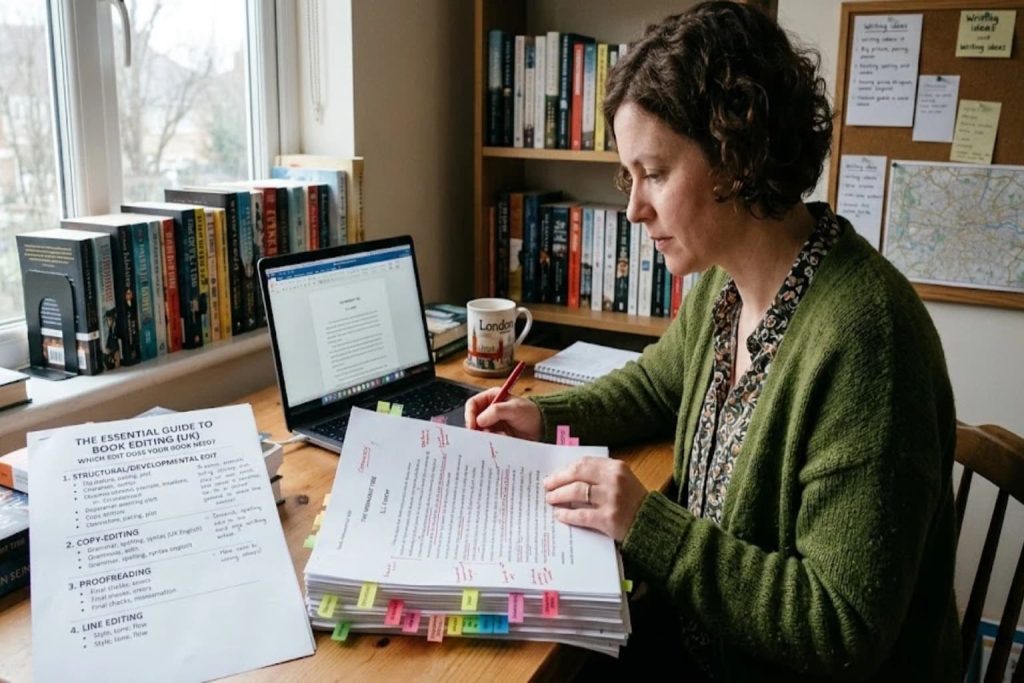


To write a book, choose a clear idea and reader, plan an outline, set a daily word target, write a rough first draft without stopping to edit, then revise and have it professionally edited before you publish. Most first-time authors need between six and twelve months.
This guide from Frontline Publishing UK, the UK branch of New York-based Frontline Publishing, shows you how to go from first idea to a finished manuscript that is ready for publication.
How Long Should Your Book Be?
Length expectations vary by genre, so set your target before you start. These typical ranges are a guide, not a rule:
| Book type | Typical length |
| Novel | 60,000 to 100,000 words (about 80,000 on average) |
| Nonfiction book | 50,000 to 75,000 words |
| Children’s picture book | Usually under 1,000 words |
To estimate your page count, divide your word count by about 275.
Step 1: Define Your Idea and Your Reader
Finish this sentence: “This book is about X, and it will help readers understand, do or feel Y.” If you cannot, your idea needs more thought. Then picture one specific reader. A memoir for your grandchildren, a business book for new managers and a thriller for commuters each need a different tone, structure and length.
Step 2: Plan an Outline
An outline is your map. For nonfiction, list your chapters and the main point of each. For fiction, note the opening, key turning points, midpoint, climax and ending. One or two sentences per chapter is enough. Your outline will change as you write, but it stops you from facing a blank page. Keep it somewhere visible, and update it as your ideas develop.
Step 3: Set a Realistic Writing Schedule
Divide your target word count by the days you can write. At 500 words a day, five days a week, an 80,000-word draft takes about seven to eight months. Choose a regular time and protect it. If word targets feel stressful, set a timer and write for 30 minutes instead.
Step 4: Write a Rough First Draft
Write forward and do not edit as you go. Your first draft only needs to exist. Many authors lose momentum by polishing chapter one for weeks. A finished draft can be fixed, but a blank page cannot. Keep a notes file for ideas and mark gaps in brackets to fill in later. Aim to finish the whole draft before you judge it.
Step 5: Revise Your Manuscript
Leave the draft alone for a week or two, then read it from start to finish before changing anything. Check the structure first: does every chapter earn its place, and does the story or argument flow? Then improve clarity, cut repetition and tighten sentences. Ask two or three honest readers from your target audience for feedback.
Step 6: Get a Professional Edit
Self-editing only goes so far, because you know what you meant to say. A professional editor spots gaps, strengthens structure and prepares the text for readers. Our book editing services improve clarity while keeping your voice, and book proofreading catches the final typos and punctuation slips.
Step 7: Prepare to Publish
A polished manuscript still needs a professional cover, interior layout, an ISBN and distribution. Book cover design and book formatting shape a reader’s first impression, and book publishing puts your book on sale in print and eBook formats.
Writing a Memoir, Nonfiction Book or Novel: What Changes?
- Memoir: focus on one theme or period of your life instead of everything, and show scenes, not just summaries.
- Nonfiction: promise readers a clear outcome, then support each chapter with examples, stories or evidence.
- Novel: build around a character who wants something, faces real conflict, and has something to lose.
How Do You Stay Motivated Until the End?
Most unfinished books stall in the middle. Break the work into small goals, such as one chapter a fortnight, and track your progress where you can see it. Tell a friend your deadline, or join a writing group for accountability. Reward each milestone, and remember that every published author once wrote a rough, imperfect first draft.
Common Mistakes First-Time Authors Make
- Editing while drafting, which slows progress and kills momentum.
- Writing for “everyone” instead of one clear reader.
- Skipping the outline and losing direction halfway through.
- Sending an unedited manuscript to be published.
- Rushing the cover, even though readers judge a book by it.
Should You Write Your Book Yourself or Hire Help?
Writing a book takes many months, and not everyone has the time or confidence to do it alone. If you have the ideas but not the hours, a ghostwriter can turn your interviews and notes into a finished manuscript in your voice. Frontline Publishing UK offers book writing and ghostwriting services for memoirs, business books, children’s books and fiction. Wondering about the budget? Read our guide to how much a ghostwriter costs in the UK.
Ready to start? Book a free consultation with Frontline Publishing UK and we will help you plan your book from first idea to finished copy. Whether you want to write it yourself or work with a ghostwriter, our team can guide you at every step.
Book Writing FAQs
How long does it take to write a book? Most first-time authors take between six and twelve months, depending on length, genre and how often they write.
How many words should a first book be? A first novel is usually 60,000 to 100,000 words, and a nonfiction book 50,000 to 75,000 words.
Do I need an outline to write a book? An outline is not compulsory, but it makes finishing far more likely because it gives every writing session a clear purpose.
Can someone write my book for me? Yes. A ghostwriter writes the book from your ideas and interviews, and you are credited as the author.
Can Frontline Publishing UK help me write my book? Yes. Frontline Publishing UK offers ghostwriting and book writing support, plus editing, design and publishing.